Hand Held Power Tools for the DYI'er
- sales188725
- May 23
- 4 min read
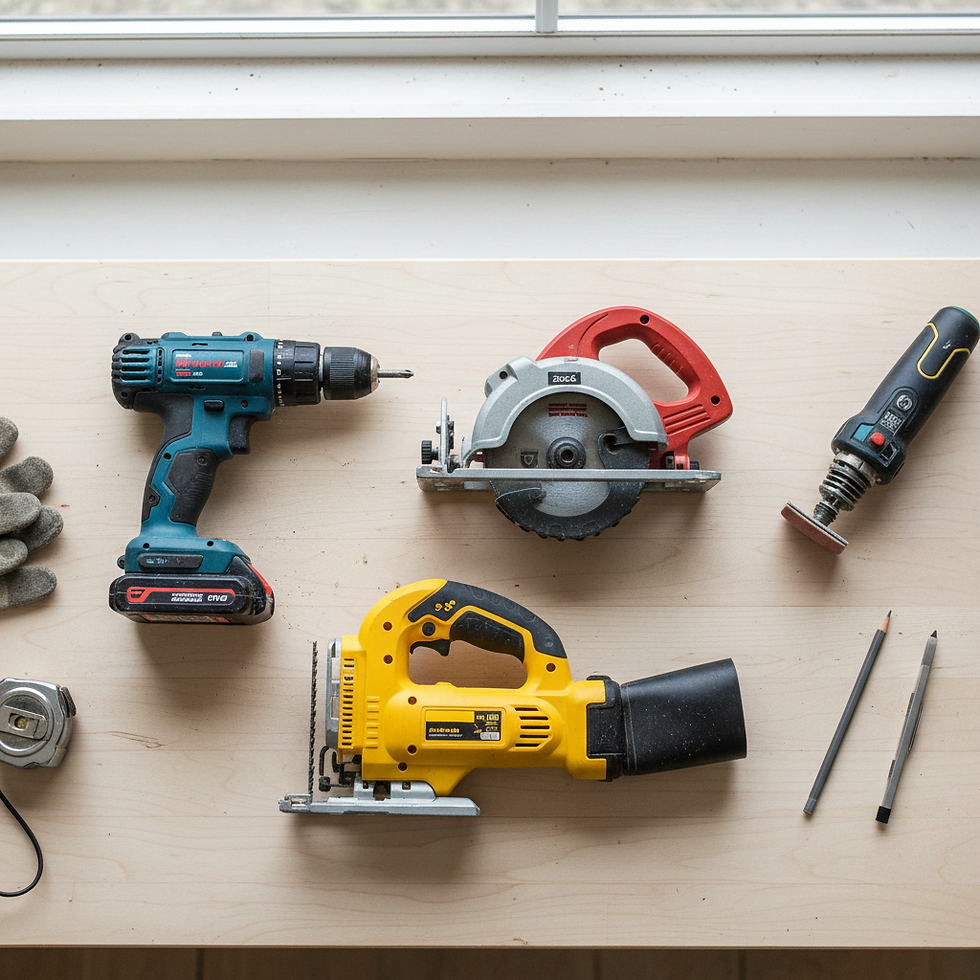
You don't need a garage full of expensive gear to tackle DIY projects. A small, well-chosen set of budget-friendly power tools can handle most home repairs, builds, and upgrades without draining your wallet. Here's what's actually worth buying and what to look for in each category.
Start with the Right Brand Ecosystem
Before buying individual tools, pick a battery platform and stick with it. Most modern cordless tools share batteries within a brand's lineup, so choosing one ecosystem saves money over time.
Ryobi 18V ONE+ is the top pick for beginners. It's compatible with over 300 tools, and batteries are widely available at most hardware stores.
Craftsman V20 offers solid performance at a lower entry price, especially on drill and driver kits.
Skil PWRCore 20 brings brushless motors and fast USB-C charging to a budget price point.
Ridgid 18V is a step up with a Lifetime Service Agreement that covers batteries and parts for registered tools.
1. Cordless Drill and Driver

A drill and driver is the single most useful tool in any DIY kit. It handles everything from assembling flat-pack furniture to driving screws into studs and drilling holes for shelving.
Top budget picks:
Skil PWRCore 20 Brushless (~$80–$90) delivers 450 in-lbs of torque and charges 25% in just 5 minutes with its PWRJump charger.
Ryobi 18V ONE+ HP Brushless (~$79–$99) offers 515 in-lbs of torque and access to the full Ryobi ecosystem.
Craftsman V20 (~$79) is a reliable workhorse for everyday tasks like driving 3-inch screws and drilling through softwood.
Black+Decker 20V MAX (~$45–$50) is the best pick for light use like hanging pictures and assembling furniture.
Look for a brushless motor if your budget allows. It runs cooler, lasts longer, and uses battery power more efficiently than brushed alternatives.
2. Circular Saw
A circular saw turns rough lumber into usable pieces. It's essential for building shelves, decking, raised garden beds, and any project that involves sheet goods or dimensional lumber.
Top budget picks:
SKIL 5280-01 (~$99, corded) comes with a built-in laser guide and dust blower. At under 8 lbs, it's easy to control for beginners.
Craftsman CMES500 is a 13-amp corded option with a magnesium shoe and tool-free bevel adjustment up to 55 degrees.
Ryobi P506 (18V ONE+, bare tool under $100) is the go-to cordless pick if you already own Ryobi batteries.
Worx WORXSAW (~$80) is a compact 4.5-inch saw that's great for light cutting without the arm fatigue of a full-size saw.
For most DIYers, a corded saw delivers more power per dollar. Go cordless only if portability is a real priority on your projects.

3. Jigsaw and Orbital Sander
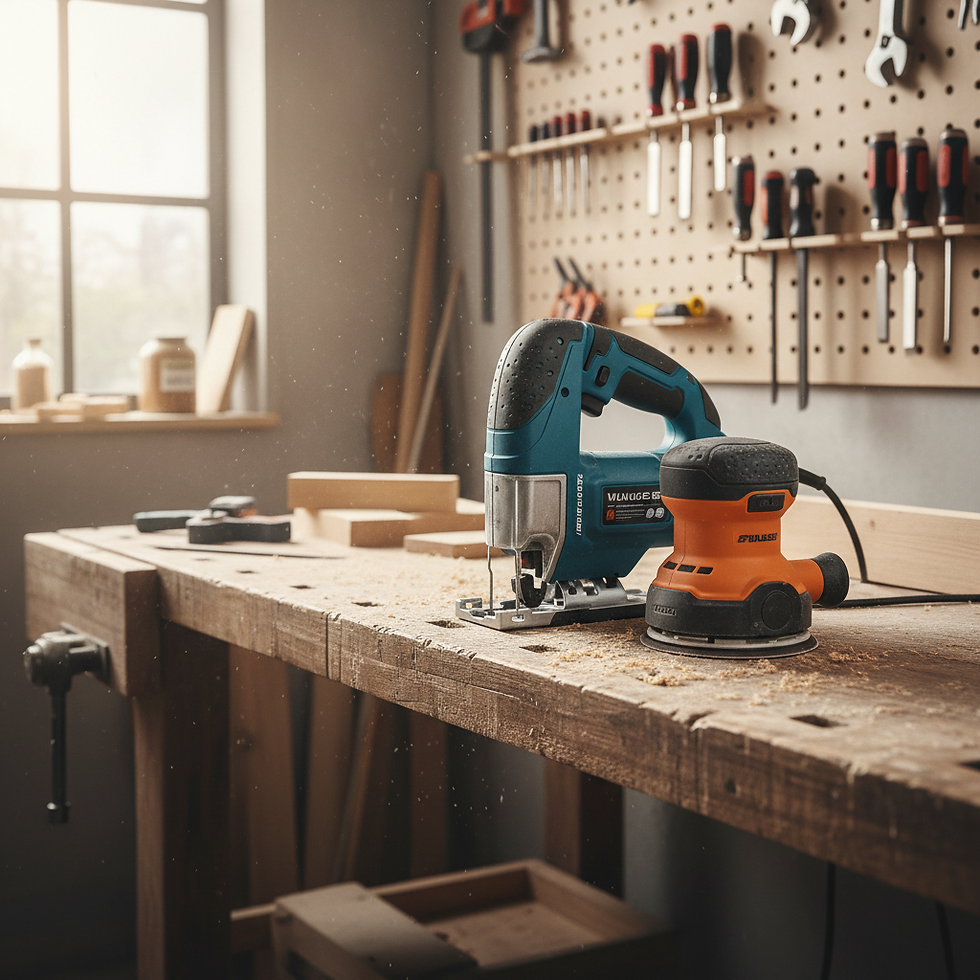
Jigsaws cut curves and irregular shapes that a circular saw can't handle. They're perfect for cutting around outlets, making arch shapes, and trimming countertops.
Black+Decker 5.0-Amp is the friendliest jigsaw for beginners, with tool-free blade changes and built-in curve guidance.
SKIL JS3131-00 adds a 4-stage orbital action for faster cuts at a still-affordable price.
Bosch JS260 (~$99, corded) is the best value option, with low vibration and a smooth blade-change system.
Orbital sanders finish wood surfaces, remove old paint, and smooth rough cuts before staining or painting.
Black+Decker 20V MAX Cordless weighs just 3 lbs and includes a battery and charger, making it a complete kit for light finishing work.
Bosch ROS20VSC is the best corded pick for beginners thanks to its excellent dust collection, which keeps your workspace cleaner.
DeWalt DWE6423 (under $100, corded) is a long-term reliable option with variable speed and low vibration.
4. Oscillating Multi-Tool
No other tool handles as many awkward jobs as an oscillating multi-tool. It cuts, sands, scrapes, and removes grout in tight spaces where saws and sanders simply can't reach.
The Ryobi 18V ONE+ Multi-Tool is the best budget pick in this category. It runs on the same batteries as the rest of the Ryobi lineup and accepts a wide range of blades and attachments. For very occasional use, the Hardell Mini Cordless Rotary Tool is a compact and affordable alternative for fine detail work and small cuts.
What to Look for When Buying
Motor Type
Brushless motors last longer and run more efficiently. Brushed motors are cheaper upfront but cost more over time in wear and battery drain.
Battery Voltage
18V and 20V tools (functionally the same) handle most DIY tasks. 12V tools are lighter and great for tight spaces but less powerful for heavy materials.
Kit vs. Bare Tool
Kits include a battery and charger, which is better value for your first tool. Bare tools are cheaper if you already own compatible batteries from the same brand.
Build Your Kit in Order
You don't need every tool at once. Start with a drill and driver since it handles the widest range of tasks. Add a circular saw next if you're cutting lumber. Then pick up a jigsaw and sander as your projects get more complex. A multi-tool fills in the gaps for repair and renovation work.
Stick to one battery platform from the start and buy kits when they're on sale. Most major retailers run significant discounts on tool kits during spring and holiday seasons, so timing your purchase can save $30 to $50 on each kit.
Prices are approximate and may vary by retailer. Always wear appropriate safety gear when operating power tools.


Comments